
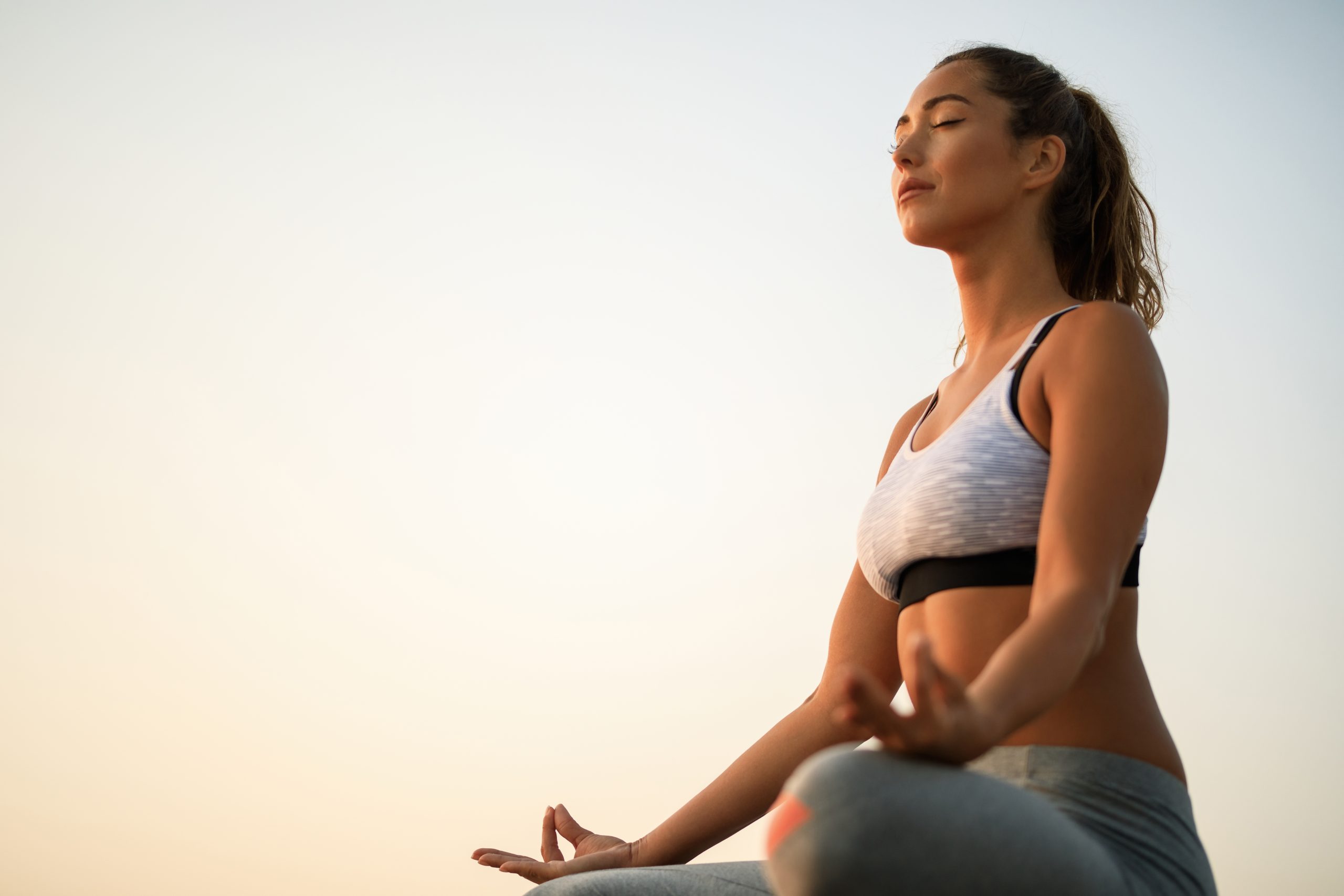
How Breathing Patterns Can Affect Your Posture
Reviewed by: Dr. David Drazic, D.C.
Reviewed for: clinical accuracy, patient safety, scope-of-practice accuracy, and service appropriateness
Posture is not only about where you put your shoulders or how straight you sit.
Breathing also requires movement through the ribcage, abdomen, spine, and surrounding muscles. Your diaphragm performs most of the work during relaxed inhalation, while muscles around the chest and neck can contribute more as breathing demand increases. (PubMed)
At the same time, the diaphragm participates in controlling the trunk.
That makes breathing and posture connected, but not in the simplistic sense that “chest breathing causes bad posture.” The relationship changes with stress, activity, pain, respiratory demand, and the way your body is moving.
How Your Diaphragm Works When You Breathe
The diaphragm is the main muscle responsible for inhalation.
It sits beneath the lungs and separates the chest from the abdominal cavity. As it contracts, it moves downward and increases the volume of the chest so air can enter the lungs. (PubMed)
During comfortable breathing, you may notice expansion around the abdomen and lower ribs as well as some movement through the chest.
None of those areas works completely independently.
Breathing requires coordinated movement of the diaphragm, ribcage, abdominal wall, and respiratory muscles. What changes is how much each component contributes under different conditions.
Your Diaphragm Also Helps Control Your Trunk
The diaphragm has a second job that receives less attention.
Research has demonstrated that it participates in postural control. During certain arm and leg movements, diaphragm activation changes before or during the movement as part of the body’s response to the challenge placed on the trunk. (PubMed)
Its activity can also contribute to increased intra-abdominal pressure, which is one mechanism involved in trunk stabilization. (PubMed)
This does not mean the diaphragm single-handedly stabilizes your spine.
The abdominal muscles, spinal muscles, pelvic structures, and nervous system all contribute. The useful takeaway is that breathing mechanics and movement control share some of the same muscular resources.
What Is Chest Breathing?
“Chest breathing” usually describes a pattern where movement appears more obvious in the upper ribcage than in the lower ribs or abdomen.
It is often presented online as something inherently dysfunctional. That is inaccurate.
The chest is supposed to move when you breathe.
During deeper breathing, physical exertion, or increased respiratory demand, accessory muscles around the neck and upper chest can assist with inhalation. The scalenes and sternocleidomastoid are two examples. (PubMed)
The pattern becomes more clinically interesting when someone appears to recruit these muscles heavily during relaxed breathing and is also experiencing persistent neck tension, shoulder discomfort, or restricted chest movement.
Even then, the observation is a clue rather than a diagnosis.
Why Stress Can Make Your Breathing Feel Higher
Think about how you breathe when you are completely relaxed compared with how you breathe after running up stairs or during a stressful situation.
The pattern changes.
Stress can increase respiratory rate and muscular tension. When your breathing becomes faster or more effortful, you may notice greater movement through the upper chest and more activity around the neck and shoulders.
That can create a feedback loop where the person feels tense, breathes more effortfully, and becomes even more aware of the neck and shoulder muscles working.
Slow breathing can be useful for relaxation, but persistent neck pain should not automatically be reduced to stress or breathing habits.
Musculoskeletal and neurological causes still need to be considered when symptoms warrant it.
Can Breathing Patterns Contribute To Neck Tension?
They may contribute in some people.
Accessory respiratory muscles such as the scalenes and sternocleidomastoid are also muscles of the neck. If they are being recruited heavily during breathing, it is reasonable that respiratory demand could add to their workload. (PubMed)
Research involving patients with chronic neck pain offers some support for examining this relationship.
One randomized controlled trial found that breathing retraining combined with chest-wall mobilization reduced accessory respiratory muscle hyperactivity during respiratory effort and produced short-term improvements in pain and respiratory measures. (PubMed)
That does not prove that the participants’ breathing patterns caused their neck pain.
It does suggest that breathing mechanics can be worth considering as one piece of an assessment.
Does Breathing Affect Your Head And Shoulder Position?
Breathing can temporarily change muscle activity and movement around the neck, shoulders, ribcage, and trunk. That is different from proving that breathing habits permanently alter posture.
A person with an elevated or forward head position may breathe perfectly well. Someone with an upright appearance may still use accessory respiratory muscles frequently.
Posture also changes continuously according to the task.
You hold yourself differently when typing, driving, exercising, carrying groceries, resting, or taking a deep breath.
The goal should not be to force the body into one visually perfect posture. It should be to determine whether breathing, movement, strength, pain, or activity demands are contributing to a problem that affects function.
How Breathing And Your Lower Back Interact
The diaphragm participates in both breathing and trunk stabilization, which makes the relationship with low back function especially interesting.
Research has identified differences in diaphragm thickness or activation in some people with nonspecific low back pain compared with people without symptoms. However, findings for diaphragm movement are less consistent, and researchers have not established diaphragm dysfunction as a universal cause of back pain. (PubMed)
That caution matters.
Back pain has many possible influences.
A person may be dealing with a joint or disc problem, muscular overload, reduced activity, previous injury, sleep disruption, stress, work demands, or several factors at the same time.
Breathing is one potential part of the system, not a hidden explanation for every sore lower back.
Can Breathing Exercises Help Lower Back Pain?
Breathing exercises have shown potential as part of rehabilitation for chronic nonspecific low back pain.
A 2024 systematic review and meta-analysis found that breathing exercises improved pain and disability compared with control interventions across the included randomized trials. (PubMed)
A larger 2026 review reached a similar general conclusion but found substantial variation between studies and rated the certainty of much of the evidence as low or very low. (PubMed)
A separate 2026 meta-analysis focusing specifically on diaphragmatic training reported moderate-certainty evidence for reductions in pain and functional disability. The authors described diaphragmatic training as an adjunct to rehabilitation rather than a stand-alone explanation or cure for low back pain. (PubMed)
That is the most defensible way to use breathing exercises clinically.
They can support an appropriate rehabilitation program when they match the patient’s needs.
A Better Breathing Check Than “Chest Or Belly?”
The familiar self-test asks you to put one hand on your chest and one on your stomach and see which one moves.
That can make you more aware of your breathing, but it cannot tell you whether your breathing is healthy or dysfunctional.
Your chest should move.
A better observation is how much effort you appear to need during a relaxed breath.
Sit comfortably and breathe normally for several cycles. Notice whether your lower ribs expand, whether your shoulders repeatedly lift, whether your breath feels easy, and whether you are holding unnecessary tension through your jaw, neck, or abdomen.
Do not try to score yourself.
You are simply noticing how your body organizes a routine task.
How To Practice Diaphragmatic Breathing
Start in a position where your back and shoulders can relax.
Place your hands around your lower ribs or one hand over your abdomen. Inhale slowly and allow the lower ribs and abdomen to expand comfortably. Exhale without forcing the air out.
Avoid exaggerating the movement.
You do not need to shove your belly outward or hold your shoulders rigidly down.
The goal is a comfortable, low-effort breath rather than a performance.
If you become dizzy or uncomfortable, return to your normal breathing pattern.
People with diagnosed respiratory or cardiovascular conditions should follow guidance from the healthcare professionals managing those conditions rather than assuming a generic breathing exercise is appropriate.
When Breathing Is A Medical Issue Rather Than A Posture Issue
Difficulty breathing should never be dismissed as a postural problem.
Sudden or unexplained shortness of breath, chest pain, fainting, blue or grey discoloration around the lips, severe wheezing, or breathing difficulty that is rapidly worsening requires appropriate medical attention.
Persistent shortness of breath during normal daily activities should also be investigated.
The musculoskeletal system can influence how breathing feels, but heart, lung, vascular, neurological, and other medical conditions need to be considered when respiratory symptoms are present.
How Lakeview Chiropractic & Acupuncture Wellness Centre Looks At Breathing And Musculoskeletal Symptoms
Lakeview Chiropractic & Acupuncture Wellness Centre evaluates neck and back complaints by looking at the patient’s history, movement, posture, and relevant orthopaedic or neurological findings rather than assuming one breathing pattern explains the symptoms.
Dr. David Drazic’s current back-pain assessment considers posture, movement, stress, work habits, previous injuries, and repetitive activity when those factors appear relevant. Recommendations may include chiropractic care, exercises to improve mobility or stability, and practical changes to everyday activities. (Lakeview Chiropractic Wellness Center)
Breathing mechanics can fit within that broader picture when they appear to influence muscular tension or trunk control.
The objective is not to convince every patient to breathe from their belly. It is to identify which factors are actually related to the complaint and build recommendations around those findings.
Frequently Asked Questions About Breathing And Posture
Does shallow breathing affect posture?
Shallow or rapid breathing can change which respiratory muscles are being recruited and may increase activity around the neck or upper chest. That does not prove that shallow breathing will permanently change someone’s posture, but it can be relevant when respiratory effort and musculoskeletal symptoms occur together. (PubMed)
Is belly breathing better than chest breathing?
Not universally. Comfortable diaphragmatic breathing can reduce unnecessary accessory muscle recruitment at rest, but the chest and ribcage normally move during breathing and accessory muscles have legitimate roles when respiratory demand rises.
Can breathing wrong cause neck pain?
There is not enough evidence to say that one incorrect breathing pattern causes neck pain. Research does suggest breathing mechanics may be clinically relevant in some people with chronic neck pain, particularly when accessory respiratory muscles appear overactive. (PubMed)
Can breathing exercises strengthen your core?
Breathing exercises can influence diaphragm and abdominal muscle activity, and the diaphragm contributes to trunk control. They should not be considered a complete replacement for progressive strengthening when improved core strength or physical capacity is the goal. (PubMed)
Can diaphragmatic breathing help back pain?
It may help selected patients with nonspecific low back pain as part of rehabilitation. Recent systematic-review evidence suggests diaphragmatic training may improve pain and disability, although it should be used alongside an individualized care plan rather than assumed to treat every cause of back pain. (PubMed)
Should my shoulders move when I breathe?
Some movement can occur naturally, particularly during deeper or more demanding breathing. Repeatedly shrugging the shoulders during quiet breathing may indicate greater accessory muscle recruitment, but that observation alone does not diagnose a breathing or musculoskeletal disorder.
Your Breathing Does Not Need To Be Perfect
Breathing happens thousands of times a day without conscious instruction because your nervous system is extremely good at adapting it to what you are doing.
Most of the time, you do not need to interfere.
There are situations, however, where becoming more aware of respiratory effort can be useful. Persistent neck tension, back pain, limited trunk control, or rehabilitation after an injury may be reasons to consider whether breathing mechanics deserve attention alongside strength, mobility, and movement.
If neck or back symptoms continue to interfere with work, sleep, exercise, or normal activity, Lakeview Chiropractic & Acupuncture Wellness Centre can assess the broader musculoskeletal picture and determine whether breathing or exercise strategies should be incorporated into your care.
Medical Disclaimer
This article is for educational purposes only and does not replace an in-person evaluation, diagnosis, or treatment plan from a licensed healthcare professional. Breathing difficulty can result from cardiac, respiratory, neurological, vascular, metabolic, and other medical conditions. Seek appropriate medical attention for sudden or unexplained shortness of breath, chest pain, fainting, severe breathing difficulty, rapidly worsening symptoms, or other concerning changes.
Sources And Clinical References
Journal Of Applied Physiology: Changes In Intra-Abdominal Pressure During Postural And Respiratory Activation Of The Human Diaphragm. Supports the diaphragm’s dual respiratory and postural functions and its contribution to intra-abdominal pressure during trunk stabilization. (PubMed)
Journal Of Physiology: Contraction Of The Human Diaphragm During Rapid Postural Adjustments. Supports evidence that the diaphragm participates in anticipatory postural control during rapid upper-limb movement. (PubMed)
StatPearls: Anatomy, Thorax, Muscles. Supports the diaphragm as the primary muscle of inspiration and identifies accessory respiratory muscles including the scalenes and sternocleidomastoid. (PubMed)
Journal Of Back And Musculoskeletal Rehabilitation: Effects Of Breathing Exercises On Chronic Low Back Pain. Supports possible reductions in pain and disability associated with breathing exercises in chronic low back pain. (PubMed)
Archives Of Physical Medicine And Rehabilitation: Diaphragmatic Training For Nonspecific Low Back Pain. Supports diaphragmatic training as a potential adjunct to rehabilitation, with moderate-certainty evidence for improvements in pain and disability. (PubMed)