
Shockwave Therapy or Class 4 Laser: Which One Do You Need?
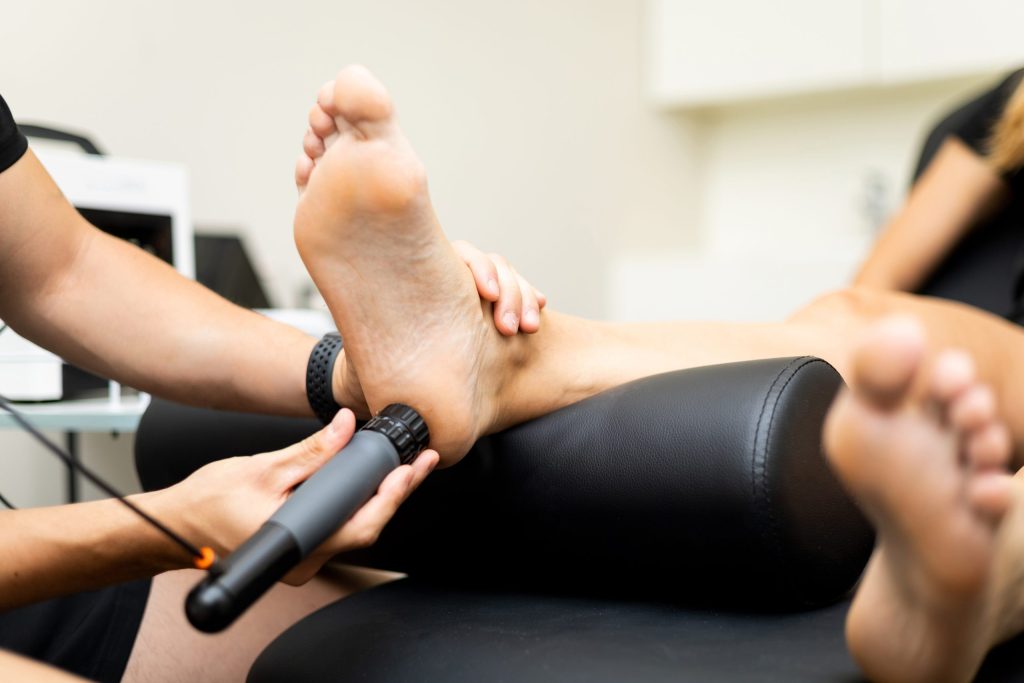
You booked in for heel pain, and the treatment plan mentions a device you have never heard of. Then a friend with a sore shoulder tells you they had the other one and it worked brilliantly. Shockwave therapy and Class 4 laser get talked about as if they are interchangeable, and they are not. They use different energy, target different problems, and feel completely different on the table. Picking between them is not a preference question. It depends on what tissue is involved and what the examination finds. Here is what each one is actually used for.
What Shockwave Therapy Is Used For
Shockwave therapy sends acoustic pressure waves through the skin into a targeted area, creating a controlled mechanical stimulus in the tissue.
It is most often considered for persistent tendon and fascia problems that have not settled with activity changes or basic conservative care:
- Plantar fasciitis and stubborn heel pain
- Achilles and patellar tendon pain
- Tennis elbow and golfer’s elbow
- Rotator cuff tendinopathy
- Selected shoulder and hip presentations
Active treatment often runs about 5 to 10 minutes per area, in a visit of roughly 15 to 20 minutes. It is typically paired with progressive loading, not used on its own.
What Class 4 Laser Therapy Is Used For
Class 4 laser delivers light energy into tissue rather than mechanical force. It may be used to support pain management and tissue recovery when it fits the clinical picture.
Where it tends to be applied:
- Painful joints, including arthritic knees and shoulders
- Muscle and soft tissue irritation
- Post-injury recovery alongside rehabilitation
- Areas too sensitive or irritable for mechanical treatment
Patients usually describe warmth rather than discomfort. Laser does not restore cartilage and does not replace disease-modifying treatment for inflammatory arthritis.
How We Decide Which One Fits
Neither device is chosen before the assessment. The sequence runs like this:
- History, symptom duration, and what activity provokes it
- Examination of movement, strength, tenderness, and load tolerance
- Safety screening for medications, pregnancy, skin, and other contraindications
- A recommendation, which may be one device, both, neither, or imaging and referral first
- Reassessment against practical goals such as walking, working, or reaching
Shockwave is not appropriate for everyone, including over active infection, certain bleeding or clotting concerns, or near growth plates in children.
Right Tool, Right Tissue
The useful question is not which device is stronger. It is which one matches what is going on in your tissue. A thickened, stubborn plantar fascia that has resisted six months of stretching is a different problem from an arthritic knee that flares after a long day on your feet, and treating both the same way wastes everyone’s time. That is also why an honest answer sometimes involves neither device, or imaging first. Both are one part of a plan that usually includes loading, rehabilitation, and follow-up. If you have been living with stubborn pain and want to know which pathway fits, book an assessment in Windsor.
Frequently Asked Questions
Are these treatments covered by insurance?
Coverage varies considerably by plan and provider, and some extended health policies treat these devices differently from standard chiropractic visits. Check your specific policy wording before starting a series, and ask our front desk for the billing codes so you can confirm with your insurer directly.
Can I have both in the same treatment plan?
Yes, when the examination supports it. They address different tissue problems, so a patient with an arthritic joint and a separate tendon issue may reasonably receive both. They are not combined by default, and adding a second device without a clinical reason is not the approach here.
Is there any downtime after treatment?
Generally no. Shockwave commonly leaves the area aching or tender for 24 to 48 hours, which is expected rather than concerning. Activity guidance depends on the tissue treated and how irritable it is, so follow the specific instructions given rather than a blanket rest or push-through rule.