
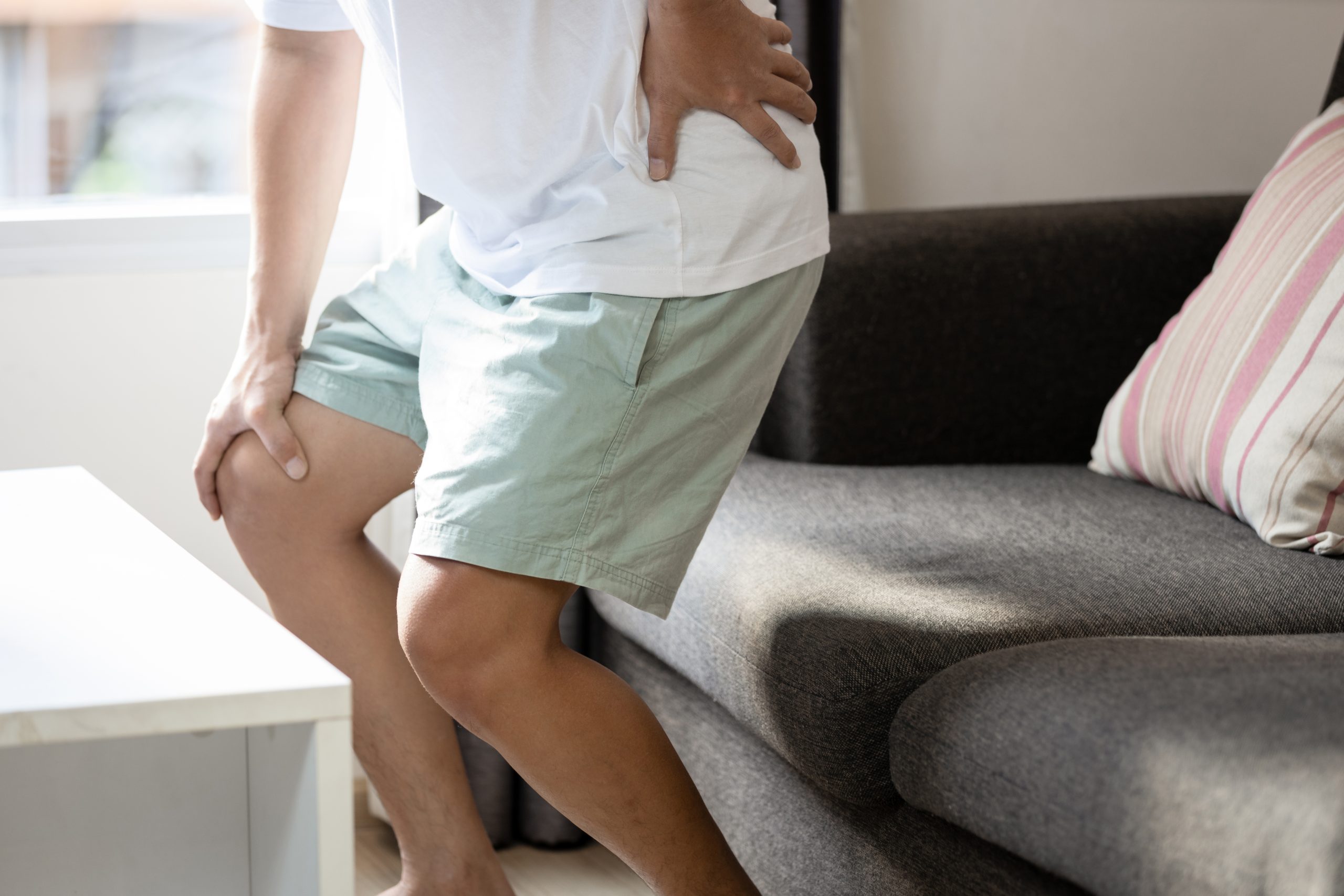
How Hip Alignment Can Contribute to Knee Pain
Reviewed by: Dr. David Drazic, D.C.
Reviewed for: clinical accuracy, patient safety, scope-of-practice accuracy, and service appropriatenes
A painful knee does not always tell you the complete story.
Walking, climbing stairs, squatting, and running require the hip, knee, ankle, and foot to work together. The way your hip controls the thigh can influence how forces move through the knee, which is why a good knee assessment often looks beyond the painful joint.
But there is an important distinction.
Hip mechanics can contribute to some knee problems. That is not the same as saying a “misaligned hip” or tilted pelvis is the hidden cause of most knee pain.
How The Hip Can Influence The Knee
Your hip controls the position and movement of the upper leg.
Muscles around the hip help move the thigh forward and backward, rotate it, and control side-to-side movement. Those actions influence the position of the knee during activities such as walking, running, stepping, and squatting.
The knee itself also has substantial responsibilities.
Although it behaves primarily as a bending and straightening joint, normal knee movement includes some rotation and translation. It is not simply a rigid hinge that fails whenever forces come from another direction.
Thinking of the hip and knee as parts of one kinetic chain is useful because it encourages clinicians to assess how the entire leg functions rather than reducing symptoms to one joint.
Hip Strength Matters, But The Relationship Is Not Simple
Weak hip muscles are commonly blamed for knee pain and inward knee movement.
The evidence is more complicated.
A 2026 systematic review examining healthy participants found that weaker hip abductors and external rotators did not consistently correspond with greater dynamic knee valgus. Most included studies found no significant relationship. (PubMed)
Earlier reviews reached similarly mixed conclusions. (PubMed)
This means clinicians should be careful about looking at someone’s knee position during a squat and immediately declaring that their glutes are weak.
Strength should be assessed. Movement should be assessed. Most importantly, those findings need to make sense alongside the patient’s actual symptoms.
Why Hip Exercises Can Still Help Knee Pain
The uncertainty around hip weakness does not mean hip exercise is pointless.
Quite the opposite.
Exercise targeting the hips is well supported as part of conservative treatment for patellofemoral pain, a common type of pain felt around or behind the kneecap.
A 2024 best-practice guide recommends knee-targeted exercise, with hip-targeted exercise incorporated according to the patient’s presentation. Education should accompany exercise, while treatments such as foot orthoses, taping, manual therapy, or movement retraining can be added when appropriate. (PubMed)
A 2025 meta-analysis also found that combined hip and knee strengthening produced better pain and functional outcomes than knee strengthening alone among the included trials. (PubMed)
In other words, strengthening the hip can help without proving that hip weakness caused the pain in the first place.
What People Mean By The Knee “Falling Inward”
You may have seen a knee drift inward while someone squats, runs, lands, or steps down.
This movement is often called dynamic knee valgus.
Hip rotation and thigh position are part of that movement, but they are not the only contributors. The knee, ankle, foot, trunk, movement technique, speed, fatigue, and the demands of the task can all influence what you see.
Dynamic knee valgus is therefore a movement description, not a diagnosis.
Recent evidence also challenges the assumption that simply strengthening the hip will automatically change knee-valgus mechanics. (PubMed)
That is why exercise programs should target pain, function, strength, movement tolerance, and the patient’s goals rather than trying to make every person’s legs look identical.
Is Pelvic Tilt Causing Your Knee Pain?
Usually, you cannot answer that from posture alone.
Your pelvis naturally tilts and rotates as you walk and change positions. People also vary anatomically, so a pelvis that does not appear perfectly level does not necessarily indicate dysfunction.
Static “alignment” measurements have limited value when they are separated from symptoms and movement.
If your knee hurts during stairs, for example, it is more useful to assess how the knee tolerates load, how the hip functions, what the ankle and foot are doing, whether there is relevant weakness or mobility loss, and whether your activity level recently changed.
The pelvis can be part of the examination without becoming the automatic explanation.
Your Feet Can Matter Too
The kinetic chain works in both directions.
Just as movement at the hip can influence the leg below it, the foot and ankle can affect how forces are managed farther up the limb.
That is why persistent knee pain may justify looking at foot position, ankle mobility, footwear, gait, and how the patient loads each side.
For patellofemoral pain, current best-practice recommendations recognize prefabricated foot orthoses as a possible supporting intervention for selected patients rather than something everyone with knee pain requires. (PubMed)
Lakeview Chiropractic & Acupuncture Wellness Centre also considers supportive footwear and other mechanical factors when evaluating some knee-pain presentations. (Lakeview Chiropractic Wellness Center)
The important part is selection. Orthotics or footwear changes should address a relevant finding, not be prescribed simply because the knee hurts.
Common Signs Of Patellofemoral Knee Pain
Patellofemoral pain is often felt around or behind the kneecap.
Symptoms commonly become noticeable during activities that increase demand on the knee while it is bent, such as running, squatting, climbing stairs, or repeated jumping.
Some people also notice discomfort after sitting with the knee bent for a prolonged period.
This is the type of knee-pain presentation where hip and knee exercise often become particularly relevant.
However, similar symptoms can occur with other conditions. A diagnosis should be based on the history and examination rather than assuming every episode of anterior knee pain is “runner’s knee.”
Why The Knee Still Needs To Be Examined
Looking beyond the knee is useful only if the knee itself is not forgotten.
Pain can arise from the patellofemoral joint, tendons, ligaments, menisci, bursae, osteoarthritis, injuries, and other sources.
The examination should consider where the pain occurs, whether there is swelling, which activities reproduce symptoms, how the joint moves, whether trauma occurred, and whether the patient experiences locking, instability, or difficulty bearing weight.
Some presentations may require imaging or referral for medical or orthopaedic assessment.
A whole-body approach should broaden the examination, not replace appropriate knee diagnosis.
What A Kinetic-Chain Assessment Can Include
Persistent knee pain may justify assessing several regions during the same visit.
Depending on the presentation, that can include:
- Knee range of motion and joint function
- Hip strength and mobility
- Squatting, stepping, walking, or other symptom-provoking movements
- Foot and ankle mechanics
- Gait
- Previous lower-limb injuries
- Training or activity changes
- Orthopaedic and neurological findings when relevant
The objective is not to find as many “imbalances” as possible.
It is to identify which findings have a plausible relationship to the patient’s pain and which ones can guide an appropriate treatment plan.
How Lakeview Chiropractic & Acupuncture Wellness Centre Assesses Knee Pain
Lakeview Chiropractic & Acupuncture Wellness Centre takes a diagnostic-first approach to knee pain.
Dr. David Drazic begins by examining the painful area and considering possible contributing factors rather than assuming the symptoms originate at the hip or spine.
The clinic’s current knee-pain process includes assessment for swelling and potential causes, with X-rays or other imaging considered when necessary. Supportive measures such as footwear or bracing may also be discussed according to the patient’s presentation. (Lakeview Chiropractic Wellness Center)
Because the lower limb functions as a connected system, the examination can also consider hip, foot, ankle, gait, or other mechanical findings when they appear relevant.
Chiropractic or other conservative care should follow the examination rather than precede it.
Frequently Asked Questions About Hip Alignment And Knee Pain
Can hip problems cause knee pain?
Hip strength, mobility, pain, and movement control can influence lower-limb function and may contribute to some knee-pain presentations. However, knee pain has many possible causes, so the hip should be assessed as one part of the complete picture.
Can weak glutes make your knees hurt?
Reduced hip strength may be clinically relevant in some patients, and hip strengthening is useful for conditions such as patellofemoral pain. Research does not support assuming that weak glutes directly cause inward knee movement or knee pain in everyone. (PubMed)
Can hip strengthening help runner’s knee?
Yes, hip-targeted exercise can be useful as part of a rehabilitation program for patellofemoral pain. Current best-practice recommendations generally combine education with knee exercise and add hip exercise according to the patient’s individual presentation. (PubMed)
Can flat feet cause knee pain?
Foot mechanics can influence lower-limb movement, but foot shape alone does not diagnose the cause of knee pain. Footwear or orthoses may help selected patients with patellofemoral pain, but they should be recommended according to individual findings rather than used automatically. (PubMed)
Why does my knee hurt when I squat or use stairs?
Squatting and stairs increase demand on the knee while it is bent, which can aggravate patellofemoral pain and several other knee conditions. Persistent symptoms should be evaluated to determine which structure or movement problem is actually involved.
Should my hip and foot be checked if my knee hurts?
They can be worth assessing when the history or examination suggests they may influence the knee. A complete lower-limb assessment often considers the hip, knee, ankle, foot, gait, and activity demands rather than assuming one region is responsible.
Look Beyond The Knee Without Losing Sight Of It
Your knee does not function in isolation.
The hip above it and the foot and ankle below it all influence how your leg moves. For some people, improving hip strength or lower-limb control becomes an important part of reducing knee pain and rebuilding activity.
For others, the primary problem is much more local to the knee.
The goal is not to find a hidden pelvic misalignment. It is to determine which parts of the movement system actually matter in your case.
If knee pain is limiting walking, stairs, work, sport, or exercise, Lakeview Chiropractic & Acupuncture Wellness Centre can assess the knee and the surrounding lower-limb mechanics to determine which conservative options may be appropriate.
Medical Disclaimer
This article is for educational purposes only and does not replace an in-person evaluation, diagnosis, or treatment plan from a licensed healthcare professional. Knee pain can result from many different conditions. Seek appropriate medical care for severe pain, substantial swelling, significant trauma, inability to bear weight, locking, rapidly worsening symptoms, or other concerning changes.
Sources And Clinical References
British Journal Of Sports Medicine: Best Practice Guide For Patellofemoral Pain. Supports education and knee exercise as foundational treatment, with hip-targeted exercise, foot orthoses, movement retraining, taping, and manual therapy considered according to individual presentation. (PubMed)
Musculoskeletal Care: Hip And Knee Strengthening Versus Knee Strengthening Alone For Patellofemoral Pain. Supports combined hip and knee strengthening for improving pain and physical function in people with patellofemoral pain while acknowledging limitations in the current research. (PubMed)
Journal Of Orthopaedic & Sports Physical Therapy: Hip And Knee Strengthening For Patellofemoral Pain. Supports the effectiveness of combined hip and knee exercise for reducing pain and improving activity in people with patellofemoral pain. (PubMed)
Knee: Hip Strength And Dynamic Knee Valgus Systematic Review. Provides updated evidence that hip abductor and external-rotator weakness does not consistently predict dynamic knee valgus, reinforcing the need for individualized assessment rather than assuming one biomechanical cause. (PubMed)