
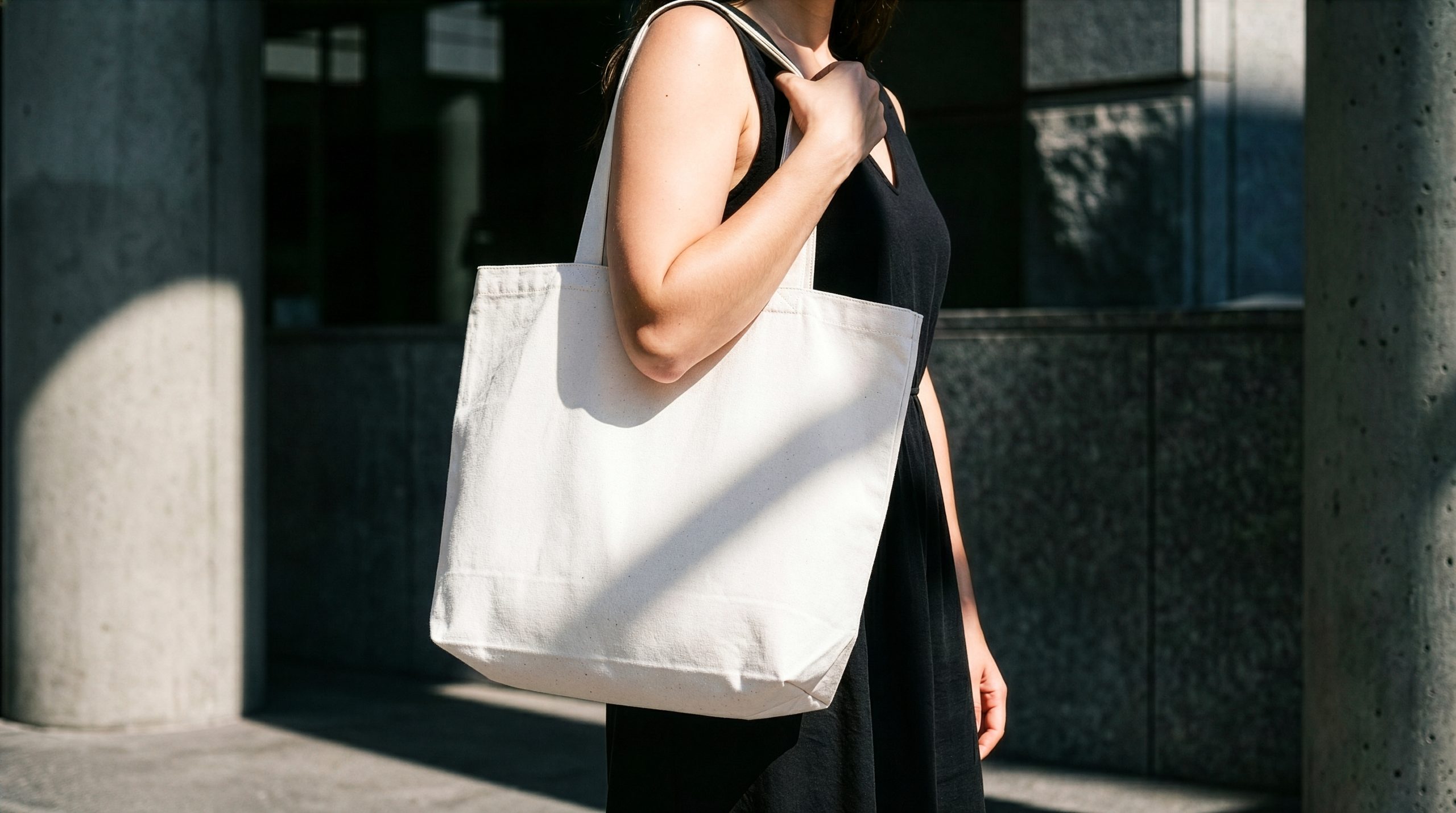
How Carrying a Bag Can Affect Your Posture and Spine
Reviewed by: Dr. David Drazic, D.C.
Reviewed for: clinical accuracy, patient safety, scope-of-practice accuracy, and service appropriateness
Most of us carry bags on autopilot.
Your laptop goes over the same shoulder every morning. The grocery tote lands in the same hand. Your purse stays on whichever side has felt natural for years.
Once weight is added to one side of your body, though, your muscles and movement have to adapt. You may shift your trunk, elevate a shoulder, change your arm swing, or recruit your back muscles differently to stay balanced.
Those responses are normal adaptations to carrying a load. Problems can arise when the bag is heavy, the carrying time is long, or the same strategy repeatedly aggravates your neck, shoulder, or back.
What One-Sided Bag Carrying Does To Your Body
An asymmetric load forces your body to manage weight that is not evenly distributed.
Studies examining shoulder bags have demonstrated different levels of muscle activity between the loaded and unloaded sides of the back. Research involving one-strap backpacks has also documented greater shoulder elevation and lateral trunk movement than when the same type of load is carried with two straps. (PubMed)
These changes make biomechanical sense.
If several kilograms are suddenly hanging from your right shoulder, your body cannot behave exactly as it did without the bag. Muscles around your shoulder, trunk, pelvis, and legs adjust so you can keep standing and walking.
The important distinction is that an adaptation while carrying a bag is not the same thing as permanent postural damage.
Does Carrying A Bag On The Same Side Permanently Change Your Posture?
Current evidence does not justify saying that ordinary shoulder-bag use permanently reshapes the spine.
A study of healthy women carrying handbags weighing different percentages of body weight found asymmetric upper trapezius and erector spinae muscle activity and increasing discomfort with heavier loads. The researchers did not find a significant change in spinal curvature during the experiment. (PubMed)
Research in children shows a similar distinction.
Loaded backpacks can alter posture and gait while they are being worn. A systematic review and meta-analysis found changes in variables such as head position, stride length, and walking speed. Those findings demonstrate that the body responds to load, not that a backpack permanently deforms the spine. (PubMed)
This is why “your bag is ruining your alignment” is not a useful diagnosis.
The better question is whether your carrying habits consistently provoke symptoms.
Why One Shoulder May Start Feeling Tight Or Tired
Your shoulder is doing more than simply providing a hook for the strap.
When a bag hangs from one side, muscles around the shoulder and upper back contribute to controlling it. If the strap tends to slide, you may elevate the shoulder slightly to keep it in place.
Arm movement can change too.
Research involving asymmetric bag carrying has found that the arm on the carrying side moves less naturally during walking because it is occupied controlling the load. (PubMed)
That may help explain why a long commute with a laptop bag can produce a very different feeling from walking the same distance empty-handed.
The bag does not need to be causing tissue damage for your shoulder to become tired. Muscles can simply be working harder or longer than they are accustomed to.
Heavy Bags Affect More Than Your Shoulder
External loads also change what happens through the trunk and lower body.
Biomechanical modelling comparing backpacks, shoulder bags, and handbags has demonstrated different levels of paraspinal muscle force and lumbar loading depending on how the bag is carried. A backpack produced the lowest lumbar burden of the three carrying styles in that particular model. (PubMed)
Another 2026 study examining healthy adults found marked side-to-side differences in hip joint moments during one-handed carrying. No significant side differences were found during two-handed carrying. (PubMed)
That does not mean carrying groceries in one hand is dangerous.
It does show why carrying strategies matter more as loads become heavier or are transported for longer periods.
Is A Backpack The Best Option?
For heavier everyday loads, a backpack worn with both straps often provides a more symmetrical carrying strategy.
Research comparing one-strap and two-strap backpacks has found less shoulder elevation and lateral trunk deviation when both straps are used. (PubMed)
Fit and weight still matter.
A backpack that is excessively heavy can encourage forward trunk lean and change walking mechanics. In children and adolescents, systematic-review evidence confirms that backpack carriage can influence gait and posture while the load is being worn. (PubMed)
The American Academy of Pediatrics recommends broad adjustable straps, both straps worn at the same time, heavier objects packed closer to the body, and a total backpack weight no greater than about 15% of a child’s body weight. (HealthyChildren.org)
For adults, there is no universal percentage that guarantees a bag will be comfortable or risk-free. A reasonable load depends on the person, bag, distance, activity, and physical capacity.
How To Tell When Your Bag Setup Needs To Change
Pain is not the only signal worth noticing.
Your carrying setup may deserve a rethink if:
- You constantly hike one shoulder to stop the strap from sliding
- Your neck or shoulder begins aching during the same commute
- You noticeably lean while carrying the bag
- Your hand or forearm becomes fatigued from a heavy tote
- Your back feels better on days when you leave the bag at home
- You need to reposition the bag constantly because it feels uncomfortable
- Increasing the load clearly makes symptoms worse
Try changing the obvious variable first.
If removing half the contents makes your symptoms disappear, that tells you something useful without requiring a complicated explanation about spinal alignment.
Practical Ways To Carry Your Bag More Comfortably
A few straightforward changes can reduce unnecessary load without turning bag carrying into an ergonomic science project.
Empty The Things You Do Not Need
Heavy bags often become heavy gradually.
Old receipts do not matter much. Neither does one charging cable. Add a laptop, water bottle, power bank, notebook, gym clothes, lunch, and everything else you carry “just in case,” and the load becomes substantial.
Clean it out periodically.
Use Both Straps On A Backpack
A backpack works best as a symmetrical carrying option when both straps are actually used.
Adjust the straps so the bag sits reasonably close to your body rather than hanging loosely behind you.
Keep Heavy Items Close To Your Body
Placing heavier objects toward the back panel of a backpack keeps the load closer to the trunk.
For children’s school bags, this is also specifically recommended by the American Academy of Pediatrics. (HealthyChildren.org)
Consider The Distance, Not Just The Weight
A bag that feels fine walking from your house to the car may feel very different after 30 minutes through an airport or downtown commute.
Duration matters.
If you regularly travel farther with your bag, choose a carrying style suited to the distance.
Alternate Sides If You Must Carry One-Sided
Switching shoulders can reduce how long the same side repeatedly manages the load, although the load remains asymmetric either way.
If carrying on one particular side consistently produces pain, do not assume you simply need to “balance yourself out.” Persistent one-sided symptoms may deserve assessment.
What About Children’s School Backpacks?
Parents often worry that a backpack will cause scoliosis or permanently damage a child’s growing spine.
The American Academy of Pediatrics states that backpacks have not been shown to cause scoliosis or long-term spinal problems. They can still contribute to back, neck, or shoulder pain when they are excessively heavy or worn poorly. (HealthyChildren.org)
For children, the organization recommends:
- Keeping the backpack at or below approximately 15% of body weight
- Using both shoulder straps
- Choosing wide, adjustable straps
- Keeping the backpack close to the body
- Packing heavier items nearest the back
- Removing unnecessary items regularly
A child who has persistent back pain, a change in gait, numbness, weakness, or symptoms that occur even without the backpack should be evaluated rather than assuming the school bag explains everything. (HealthyChildren.org)
When Neck Or Back Pain Is More Than A Bag Problem
Changing your bag is a reasonable first experiment when the relationship seems obvious.
If symptoms persist after the load is reduced, the bag may not be the whole story.
An assessment becomes more useful when neck, shoulder, or back pain repeatedly returns, limits movement, interferes with work or exercise, or remains present even when you are not carrying anything.
Radiating pain, numbness, tingling, or weakness also deserves closer evaluation.
Seek prompt medical care for severe or rapidly worsening neurological symptoms, significant trauma, substantial weakness, chest pain, or other concerning changes.
How Lakeview Chiropractic & Acupuncture Wellness Centre Assesses One-Sided Neck And Back Pain
Lakeview Chiropractic & Acupuncture Wellness Centre uses a diagnostic-first approach when carrying, work, or everyday activity repeatedly causes discomfort.
Dr. David Drazic begins by looking at the symptoms themselves rather than assuming the patient’s posture needs to be “corrected.” The assessment may include health history, posture and movement evaluation, and orthopaedic or neurological testing when appropriate. Work habits, repetitive motions, past injuries, and other lifestyle factors may also be considered when they appear relevant. (Lakeview Chiropractic Wellness Center)
If a musculoskeletal problem is identified, recommendations may involve chiropractic care, mobility or stability exercises, and practical changes to everyday activities. (Lakeview Chiropractic Wellness Center)
That could include changing the way a bag is carried, but treatment should address the examination findings rather than treating the bag as proof that the spine is misaligned.
Frequently Asked Questions About Bags And Posture
Can carrying a purse on one shoulder cause neck pain?
A heavy one-sided bag can increase muscular demand around the shoulder and back and may contribute to discomfort in some people. Research has demonstrated asymmetric upper trapezius and back-muscle activity during handbag carrying. (PubMed)
Can carrying a heavy bag cause uneven shoulders?
One-sided loads can temporarily elevate the loaded shoulder or change trunk position while the bag is being carried. This does not mean the shoulder will necessarily remain permanently higher after the load is removed. (PubMed)
Should I switch which shoulder I carry my bag on?
Alternating sides can reduce the amount of time one side consistently bears the load. Reducing the bag’s weight or choosing a two-strap carrying method may be more useful when the bag is particularly heavy.
Is a crossbody bag better than a shoulder bag?
A crossbody strap may reduce the need to actively hold the strap on one shoulder, but it still creates an external load that your body must manage. Weight, duration, fit, and comfort matter more than assuming one design is universally best.
Can backpacks cause scoliosis?
Backpacks have not been shown to cause scoliosis or long-term spinal deformity. Poorly fitted or excessively heavy backpacks can still contribute to neck, shoulder, or back discomfort. (HealthyChildren.org)
How much should a child’s backpack weigh?
The American Academy of Pediatrics recommends keeping backpack weight to no more than approximately 15% of a child’s body weight and using both shoulder straps. (HealthyChildren.org)
Can chiropractic care help if carrying a bag hurts my back?
Chiropractic care may be appropriate if an examination identifies a musculoskeletal problem contributing to the symptoms. Reducing or changing the aggravating load is also important because repeatedly provoking the same symptoms can work against recovery.
Carry What You Need, Not What Your Body Has To Compensate For
Your body is designed to adapt to carrying things.
A shoulder bag does not automatically pull your spine out of alignment. A heavy tote does not guarantee an injury. Even asymmetrical movement is not inherently abnormal.
Load still matters.
If a bag regularly makes you hike your shoulder, lean, or finish the day with neck or back pain, changing what you carry and how you carry it is a reasonable place to start.
If symptoms remain despite those changes, Lakeview Chiropractic & Acupuncture Wellness Centre can evaluate your neck, back, and movement to determine whether a musculoskeletal issue may also be contributing.
Medical Disclaimer
This article is for educational purposes only and does not replace an in-person evaluation, diagnosis, or treatment plan from a licensed healthcare professional. Neck, shoulder, and back pain can have many causes. Seek appropriate medical care for severe, rapidly worsening, traumatic, neurological, or otherwise concerning symptoms.
Sources And Clinical References
PubMed: The Response Of The Body When Carrying A Handbag. Supports evidence of asymmetric upper trapezius and back-muscle activity and increasing discomfort during heavier handbag carriage while finding no significant immediate change in spinal curvature. (PubMed)
PubMed: The Biomechanical Effects Of Different Bag-Carrying Styles On The Lumbar Spine And Paraspinal Muscles. Supports differences in lumbar forces and muscular demand associated with backpack, shoulder-bag, and handbag carrying styles. (PubMed)
Pediatric Physical Therapy: The Influence Of Backpack Weight On The Biomechanics Of Children And Adolescents. Systematic review and meta-analysis supporting changes in posture, walking speed, and stride characteristics during backpack carriage. (PubMed)
American Academy Of Pediatrics: Backpack Safety. Supports using both shoulder straps, distributing backpack contents appropriately, keeping the bag close to the body, and limiting children’s backpack loads to approximately 15% of body weight. It also states that backpacks have not been shown to cause scoliosis or long-term spinal problems. (HealthyChildren.org)